US Personal Income Rose 0.2% in August as Spending Surged 0.9%
Americans earned more in August but spent at nearly five times that pace, pushing the personal saving rate to 4.1%, BEA data show.
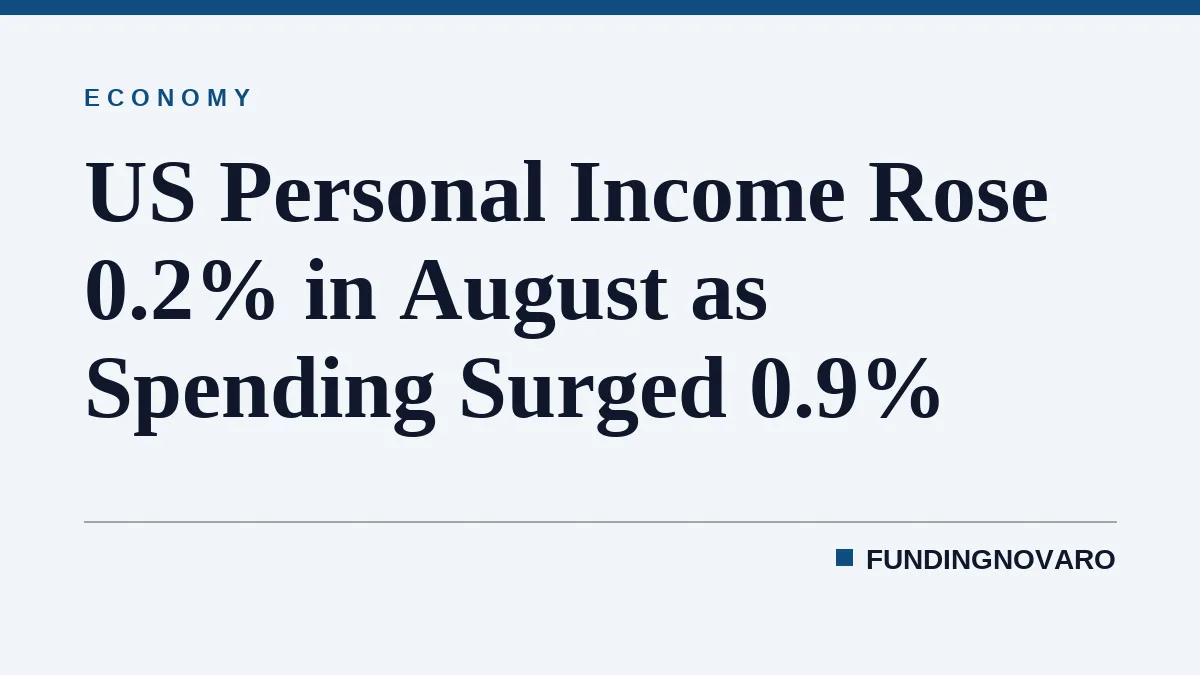
Personal income in the United States climbed $66.6 billion, or 0.2 percent, in August, while consumer spending accelerated sharply, the U.S. Bureau of Economic Analysis reported. The divergence between income growth and outlays signals households drew on savings or credit to sustain purchases during the month.
Disposable personal income — the amount remaining after current taxes — rose $68.6 billion, or 0.3 percent, a slightly stronger gain than the headline income figure, reflecting the net effect of tax obligations on take-home pay.
Read more US Economy Grew 2.2% in Q2 2026, BEA Final Estimate Shows →
Personal consumption expenditures, the Federal Reserve's preferred inflation gauge, jumped $190.8 billion, or 0.9 percent — roughly three times the pace of disposable income growth. Total personal outlays, which include interest payments and transfer payments in addition to consumption, rose $190.7 billion, closely tracking the PCE figure.
Despite the spending acceleration, Americans maintained a positive savings cushion. Personal saving stood at $990.2 billion in August, with the personal saving rate — saving as a share of disposable personal income — at 4.1 percent. The gap between income and spending growth raises questions among analysts about the durability of consumption if wage gains remain modest in coming months.
Continue reading at U.S. Bureau of Economic Analysis.